

 Search
What Does Effective Home Defense Training Look Like?
Effective home defense training combines firearms proficiency with situational awareness, practical drills, and sound tactics. The best way to develop these skills is through hands-on courses led by certified instructors who can provide real-time feedback and scenario-based practice.
Owning a firearm for home defense is only the first step. Without proper firearms training, that firearm may not serve you well when seconds count. Home defense training teaches you how to handle your weapon under stress, move safely through your living space, and make quick decisions when your family’s safety is on the line.
Training matters because real threats don’t follow a script. A home invasion can happen at any hour, often in low light, and with little warning. The confidence to respond effectively comes from repetition, practice, and learning from qualified instructors who understand defensive tactics. This combination of awareness, technique, and mental preparation separates someone who simply owns a gun from someone who can actually protect their home.
The First Line of Defense: Mindset and Awareness
Before you ever draw a firearm, your mind is your primary weapon. Situational awareness is the ability to recognize potential threats before they escalate into dangerous encounters. This skill applies both inside and outside the home and forms the foundation of any personal safety strategy.
Evaluating Your Home Security
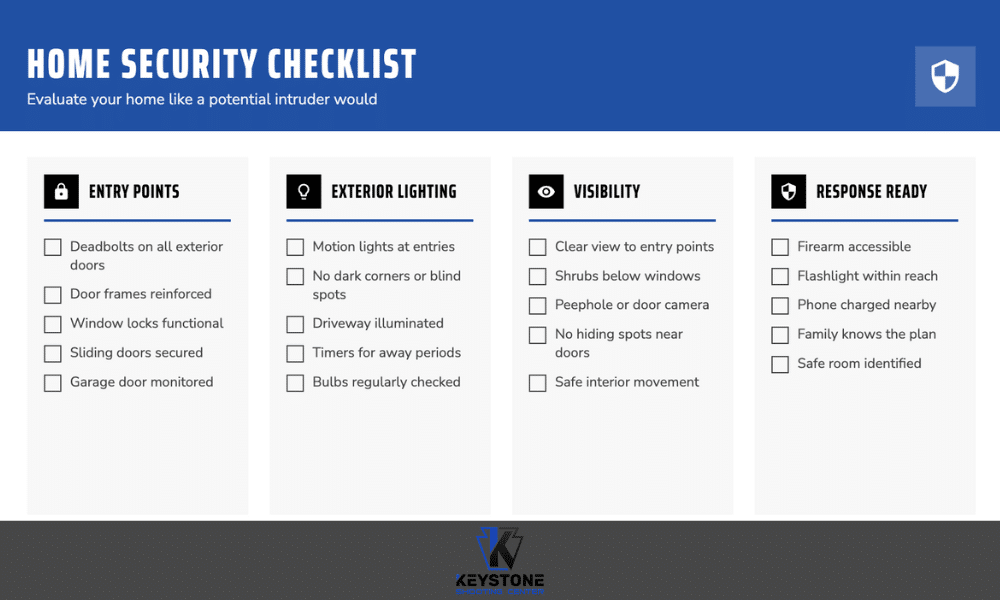
Start by evaluating your home through the eyes of someone looking to break in. Are entry points well-lit? Are doors and locks secure? Do you have a clear sightline from common areas to doors and windows? Simple adjustments to lighting, landscaping, and lock quality can reduce your risk before a threat ever reaches your door.
Mental Preparation and Decision-Making
Mental preparation matters just as much as physical readiness. Law enforcement and military personnel train extensively on decision-making under pressure because hesitation can be costly. You should have a plan for where family members go during an emergency, how you will communicate, and what your defensive position looks like. Training programs help participants think through these scenarios in advance so they can act decisively rather than freeze when it counts.
Prevention and awareness will always be your most effective tools. A fight avoided is a fight won.
Practical Drills to Sharpen Your Home Defense Skills
Knowing how to shoot at a static range target is different from knowing how to defend your home. Practical drills bridge that gap by building muscle memory and reinforcing good habits under realistic conditions.
Firearm Handling and Accuracy
Start with the basics. Your draw stroke, sight alignment, and trigger control should be consistent every time. Dry fire practice allows you to work on these fundamentals at home without live ammunition. This type of physical repetition builds the automatic responses you need when there’s no time to think. Sim guns and laser training systems offer another way to practice mechanics safely while adding feedback on your accuracy.
Low-light shooting deserves special attention. Most home invasions happen at night or in dim conditions. If you’ve never practiced acquiring a target in the dark or using a weapon-mounted light, your first attempt shouldn’t be during an actual emergency. Range sessions that incorporate low-light scenarios prepare you for the reality of defensive shooting.
Movement and Tactics
Shooting from a stationary position is only part of the equation. Defensive tactics include how to move through your home without exposing yourself unnecessarily. Concepts like “slicing the pie” help you clear angles gradually rather than walking blindly into a room. Understanding the difference between cover and concealment can save your life.
These skills are difficult to learn from a book or video. Working with an instructor in a hands-on training course allows you to practice movement, receive corrections, and build confidence in your ability to navigate your home under threat.
Self-Defense Beyond the Firearm
Home defense doesn’t always involve a gun. You may encounter a situation where a firearm isn’t accessible or appropriate. Pepper spray offers a non-lethal option that can create distance and time to escape. Basic self-defense techniques give you options if a threat gets too close. A well-rounded training approach covers multiple tools so you can respond to a range of scenarios.
How to Choose the Right Home Defense Course
Not all training courses are created equal. The right program will match your current skill level, challenge you to improve, and leave you with practical knowledge you can apply immediately.
What to Look for in an Instructor
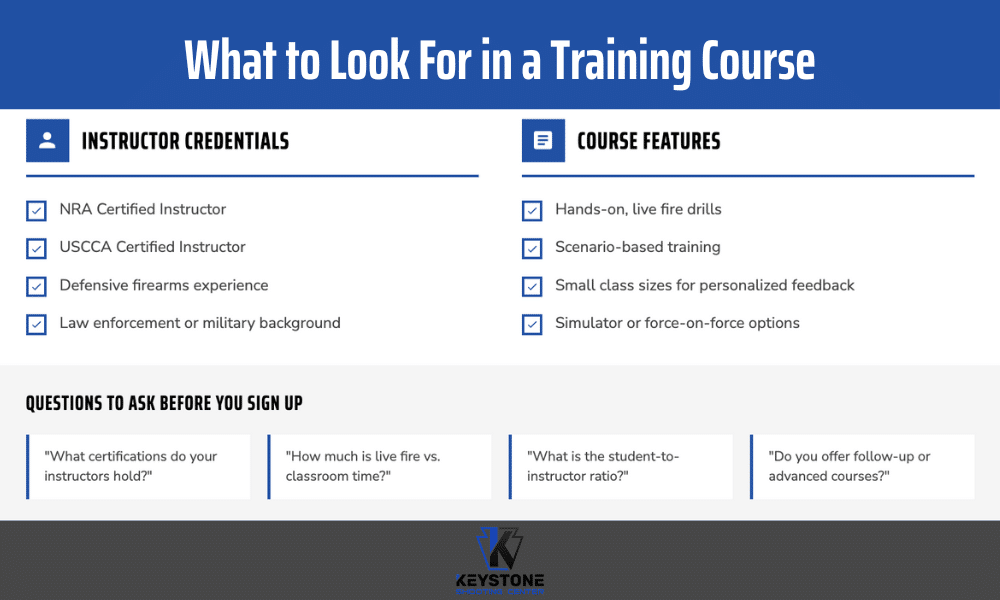
Look for instructors who hold certifications from recognized organizations like the NRA or USCCA. These credentials indicate a baseline of knowledge and teaching ability. A quality instructor does more than demonstrate techniques. They watch your form, correct mistakes, and adapt their coaching to your needs. The difference between a basic knowledge class and an advanced home defense course often comes down to the depth of scenario-based training and the experience of the instructor leading it.
Types of Courses Available
Course formats vary widely. Beginner courses cover firearm safety, basic marksmanship, and an introduction to defensive concepts. Advanced courses build on that foundation with force-on-force scenarios, decision-making drills, and more complex tactical problems. Some programs cater to specific groups, such as women-only classes or courses designed for concealed carry permit holders. Simulator technology, like the TI Gunfighter PRO system, creates realistic training environments where you can practice judgment and response without live fire.
Getting the Most From Your Training
Getting the most from any course requires active participation. Ask questions, request feedback, and push yourself beyond your comfort zone. Training doesn’t end when the class does. The skills you learn need regular practice to stay sharp. Continued range time and periodic refresher courses keep your abilities from fading and support long-term personal growth as a defensive shooter.
Train With Confidence at Keystone Shooting Center
Keystone Shooting Center offers the facilities, instruction, and resources to help you build real home defense skills. As a veteran-owned training facility near Pittsburgh, we bring a professional, safety-focused approach to every class we teach.
Our certified instructors have trained over 12,000 students across a full range of courses, from basic handgun fundamentals to advanced tactical programs. Private training sessions provide one-on-one coaching tailored to your goals and skill level. For realistic scenario practice, our TI Gunfighter PRO simulator features over 200 immersive situations that test your judgment and response under pressure.
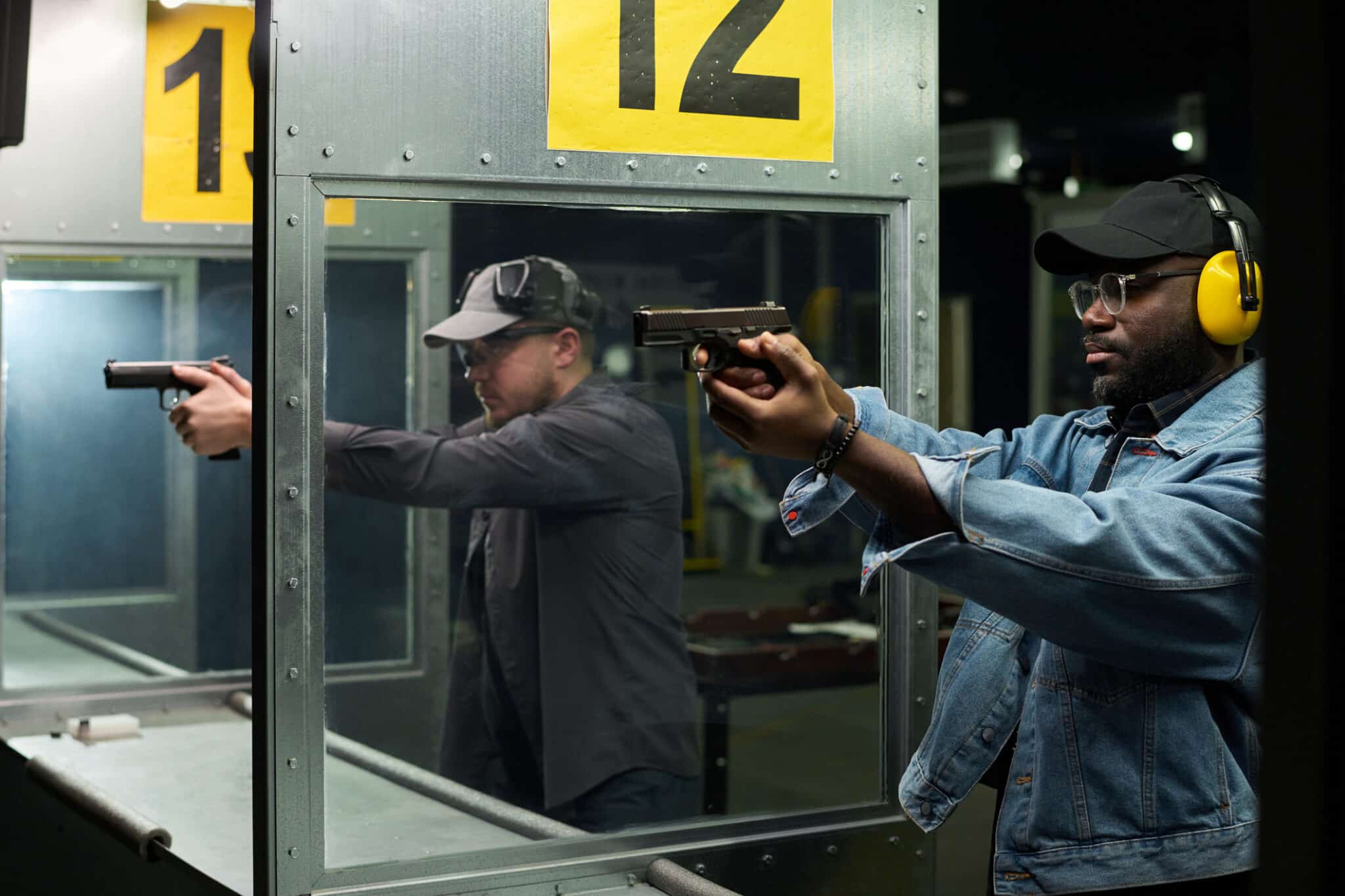
When you’re ready to put your skills into practice, our 24 climate-controlled shooting lanes offer a clean, comfortable environment for live fire drills. We also carry a wide selection of firearms, optics, and accessories if you’re still building your home defense setup.
Home defense training is an investment in your ability to protect what matters most. Contact Keystone Shooting Center today to learn about upcoming classes or schedule a private training session with one of our instructors.