

 Search
How to Choose Your First Handgun: A Beginner’s Buying Guide
Buying your first firearm is a major decision and the beginning of an important responsibility. Whether your goal is home protection, concealed carry, recreational shooting, or simply learning a new skill, choosing the right handgun takes careful consideration. Walking into a gun store for the first time can feel overwhelming. The walls may be lined with hundreds of makes and models, online forums are filled with strong opinions, and everyone seems to recommend something different.
So, how do you sort through all the information? The right handgun is not necessarily the most popular, the most expensive, or the smallest. It is the one that best fits your intended use, your hands, your experience level, and your training goals.
This guide covers the most important factors to consider before purchasing your first handgun.
1. Define Your Primary Purpose
Before comparing brands or specific models, think about how you plan to use the firearm. There is rarely one handgun that performs every role equally well. A firearm that is comfortable for long practice sessions may be difficult to conceal, while a handgun designed for discreet carry may be more challenging for a new shooter to control.
Home Defense
If the handgun will primarily remain in your home, you may not need to prioritize concealability. Many first-time buyers find medium-size and full-size handguns easier to grip, control, and shoot comfortably. Their additional size and weight can help reduce felt recoil, while the larger grip provides more room for both hands. Full-size handguns may also offer greater ammunition capacity and a longer sight radius when using traditional iron sights. However, the best choice will still depend on your hand size, comfort level, storage plan, and ability to operate the firearm safely.
Concealed Carry
If you plan to carry a handgun regularly, size and weight become more important. Compact and micro-compact handguns are generally easier to conceal beneath everyday clothing. However, smaller firearms may have shorter grips, reduced capacity, and more noticeable recoil. The goal is to find a handgun that is comfortable enough to carry while still being manageable to shoot and practice with consistently. Your choice should also account for a proper holster, secure storage, clothing, lifestyle, training, and all applicable federal, state, and local laws.
Range Practice and Recreation
You may simply want to learn a new hobby, improve your shooting skills, or spend time at the range. For recreational shooting, prioritize comfort, reliability, and ammunition cost. A handgun that feels comfortable in your hands and is enjoyable to shoot will make it easier to practice regularly. Many beginners benefit from starting with a medium-size or full-size handgun because it provides a stable platform for learning proper grip, sight alignment, and trigger control.
2. Do Not Assume Smaller Means Easier
One of the most common mistakes among first-time buyers is assuming that the smallest and lightest handgun will also be the easiest to shoot. In many cases, the opposite is true.
When a firearm is discharged, recoil energy moves back toward the shooter. A larger and heavier handgun can use its weight to help absorb some of that movement. A lightweight handgun transfers more of the felt recoil into the shooter’s hands and wrists. Small handguns may also have shorter grips, leaving less room for the support hand and sometimes preventing the shooter’s smallest finger from resting fully on the grip. As a result, compact and micro-compact pistols can feel sharper or more difficult to control than larger handguns chambered in the same caliber.
This does not mean small handguns are a poor choice. They can be excellent for concealed carry. However, new shooters should try several sizes before deciding which one offers the best balance of comfort, control, and concealability.
3. Choose a Practical Caliber
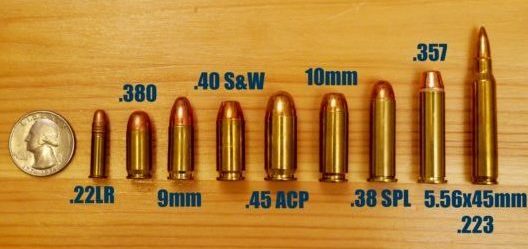
Caliber refers to the size and type of ammunition a firearm uses. New buyers will encounter many options, but a few calibers are especially common in modern handguns.
9mm Luger
The 9mm is one of the most popular handgun calibers in the United States. It is widely used by law enforcement, the military, competitive shooters, and private firearm owners. Ammunition is generally easy to find and more affordable than many larger handgun calibers. It also offers manageable recoil in many medium-size and full-size firearms. For many shooters, 9mm provides a practical combination of ammunition capacity, availability, cost, and controllability. These qualities make it one of the most common starting points for first-time handgun buyers.
.380 ACP
The .380 ACP uses a bullet with the same approximate diameter as a 9mm, but it is loaded in a shorter case and generally produces less energy. It can be a practical option for shooters who prefer a lighter-recoiling cartridge, particularly when it is chambered in a larger or purpose-built easy-to-operate handgun. However, many .380 ACP firearms are designed to be extremely small and lightweight. These pocket-size pistols can still produce surprisingly sharp felt recoil because there is less firearm mass to absorb the movement. Trying a .380 ACP handgun before purchasing is especially important.
.45 ACP
The .45 ACP has a long history in the United States and fires a larger, heavier bullet than the 9mm. Handguns chambered in .45 ACP usually hold fewer rounds than similarly sized 9mm handguns because the ammunition is physically larger. Ammunition also generally costs more, which can increase the expense of regular practice. The felt recoil is more significant, although some shooters describe it as a slower push rather than the sharper recoil found in certain lightweight handguns. It remains a popular caliber, but new shooters should consider the additional recoil, capacity differences, and ongoing ammunition costs.
.22 LR
The .22 LR produces very little recoil and is one of the most affordable types of ammunition available. It is an excellent option for learning the fundamentals of handgun shooting, including grip, sight alignment, trigger control, and follow-through. Its low recoil can help beginners build confidence without becoming distracted by a strong kick. Although it is generally quieter than centerfire handgun ammunition, a .22 LR firearm can still cause permanent hearing damage. Proper hearing and eye protection are always required. A .22 LR handgun is primarily recommended as an affordable training and recreational option rather than a first-choice defensive firearm.
4. Pay Attention to Hand Fit and Ergonomics
A handgun should fit your hands and allow you to operate it safely and comfortably. Do not select a firearm simply because it is popular online, recommended by a friend, or visually appealing. Two handguns with similar dimensions can feel completely different once you hold them. When establishing a proper grip, your trigger finger should reach the trigger naturally without forcing you to rotate the firearm in your hand.
You should also test the controls. Consider whether you can comfortably:
- Reach and press the magazine release
- Operate the slide stop or slide release
- Rack and lock the slide
- Reach and operate a manual safety, if equipped
- Load the magazine
- Align the sights clearly
- Safely unload the firearm and verify that it is clear
Some handguns include interchangeable backstraps or grip panels that can help adjust the grip to different hand sizes. A firearm that feels awkward or difficult to operate in the store is unlikely to become easier during live fire. The best fit should allow you to maintain a secure grip and operate the controls without unnecessary strain.
5. Budget Beyond the Price of the Handgun
The cost of firearm ownership extends beyond the purchase price. Responsible ownership requires additional equipment, ammunition, maintenance supplies, training, and secure storage. Include these items when establishing your total budget.
Practice and Defensive Ammunition
Many handgun owners purchase different ammunition for practice and defensive use. Full Metal Jacket, or FMJ, ammunition is commonly used for range practice. It generally consists of a lead core enclosed by a harder metal jacket and is often more affordable than defensive ammunition. Jacketed Hollow Point, or JHP, ammunition is designed to expand under appropriate conditions and is commonly selected for defensive use. Defensive ammunition should be tested in your specific handgun to confirm reliable operation.
Before purchasing ammunition, verify that it is the correct caliber and type for your firearm. You should also confirm that it is permitted at the range where you plan to practice.
Cleaning and Maintenance Supplies
Firearms are mechanical devices that accumulate carbon, residue, and debris through regular use.
A basic maintenance kit may include:
- A cleaning rod or bore snake
- Caliber-appropriate brushes
- Cleaning patches
- Firearm-safe solvent
- High-quality lubricant
- A cleaning cloth or mat
Follow the maintenance schedule and instructions provided by the firearm’s manufacturer. Proper cleaning, inspection, and lubrication help support reliable operation and protect the firearm from premature wear or corrosion.
Eye and Hearing Protection
Quality eye and hearing protection are essential every time you enter a shooting range. Many indoor shooters use both foam earplugs and over-ear protection for additional noise reduction. Electronic hearing protection is another popular option because it reduces damaging noise while allowing conversations and range commands to remain audible.
Secure Storage
Secure firearm storage is a critical part of responsible ownership in every household. A properly selected safe or lockbox can help prevent unauthorized access while allowing the owner to establish an appropriate access plan. Consider the safe’s locking system, construction, mounting options, access method, and location. Electronic and biometric safes vary in quality, so compare products carefully and test the access method regularly. Your storage plan should account for children, guests, theft prevention, household members, and all applicable laws.
A Quality Holster
Anyone planning to carry a handgun should budget for a properly designed holster. A quality holster should securely retain the firearm and completely cover the trigger guard. It should also be designed for the specific make and model of the handgun. Avoid carrying a loose firearm in a pocket, bag, waistband, or vehicle compartment without an appropriate holster or secure storage system.
6. Invest in Professional Education
Owning a firearm is a significant responsibility. Selecting the right equipment is only one part of becoming a safe and capable firearm owner. Professional instruction can help you learn proper safety practices and avoid developing habits that become difficult to correct later. Keystone Shooting Center’s Basic Handgun Course introduces new shooters to essential firearm safety and handgun operation in a controlled and supportive environment.
Depending on the course curriculum, students may learn how to:
- Follow the fundamental rules of firearm safety
- Safely load and unload a handgun
- Establish a proper grip and stance
- Align the sights
- Control the trigger
- Identify and clear common malfunctions
- Practice safe range procedures
- Store and maintain a firearm responsibly
A formal class also gives new shooters the opportunity to ask questions and receive direct feedback from experienced instructors. Laws governing firearm ownership, transportation, storage, and carry can change and may vary by location. Consult current official government resources or a qualified attorney for legal guidance.
7. Try Before You Buy
Reading reviews and comparing specifications can help narrow your choices, but they cannot tell you exactly how a firearm will feel in your hands or how it will perform during live fire. A handgun may feel comfortable at the sales counter but produce more recoil than expected. Another model may not look as appealing online but may fit your hands perfectly and be easier to control.
Testing several handguns side by side is one of the most effective ways to make an informed decision. At Keystone Shooting Center, our rental wall gives you the opportunity to compare different brands, sizes, action types, and calibers before making a purchase.
When testing a handgun, consider:
- How comfortably it fits your hands
- Whether you can reach and operate the controls
- How difficult the slide is to rack
- How clearly you can see the sights
- How the trigger feels
- How much recoil you experience
- How quickly you can regain your sight picture
- Whether you enjoy shooting it enough to practice regularly
Our team can help explain the differences between your options and answer questions, but the final choice should be based on your own comfort, needs, and shooting experience.
Take Your Time and Choose with Confidence
Choosing your first handgun is an important decision. There is no single model, size, or caliber that is right for every person. Focus on your intended use, hand fit, ability to operate the firearm, comfort during live fire, training needs, storage plan, and total budget. Do not feel pressured to make a decision based only on online opinions or brand recognition. Take the time to handle several options, test your leading choices, and ask questions.
Visit Keystone Shooting Center to explore our handgun selection, test different models from our rental wall, or begin your education through one of our training courses.
Our knowledgeable team is here to help you compare your options and make a safe, responsible, and informed decision. Your journey toward confident firearm ownership starts with proper education and hands-on experience.